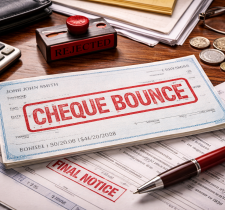
Cheque bounce, also known as dishonour of cheque, is a common financial dispute in India that can lead to serious legal consequences. Governed by Section 138 of the Negotiable Instruments Act, 1881, cheque bounce cases are treated as criminal offences, making it essential for both individuals and businesses to understand the legal framework, process, and remedies available.
What is a Cheque Bounce?
A cheque is said to have “bounced” when it is returned unpaid by the bank due to insufficient funds, signature mismatch, overwriting, or other technical reasons. Among these, insufficient funds is the most common reason that triggers legal action under Section 138.
Legal Provision: Section 138 of NI Act
Section 138 was introduced to enhance the credibility of cheque transactions and ensure financial discipline. It makes cheque dishonour a punishable offence if certain conditions are met.
Key Ingredients of Section 138:
- The cheque must be issued for the discharge of a legally enforceable debt or liability.
- The cheque must be presented within its validity period (usually 3 months).
- The cheque must be returned unpaid due to insufficient funds or similar reasons.
- A legal notice must be sent by the payee within 30 days of receiving the cheque return memo.
- The drawer must fail to make payment within 15 days of receiving the notice.
If all these conditions are fulfilled, a criminal complaint can be filed.
Common Reasons for Cheque Bounce
- Insufficient funds in the account
- Signature mismatch
- Account closed
- Post-dated cheque presented early
- Overwriting or alterations
- Technical issues like damaged cheque
Understanding the reason is important because not all cheque returns qualify under Section 138.
Step-by-Step Legal Process
1. Cheque Presentation
The payee deposits the cheque in their bank. If dishonoured, the bank issues a Cheque Return Memo stating the reason.
2. Legal Notice
The payee must send a demand notice to the drawer within 30 days of receiving the memo. This notice demands payment within 15 days.
3. Waiting Period
The drawer gets 15 days to clear the dues. If payment is made, the matter ends.
4. Filing a Complaint
If the drawer fails to pay, the payee can file a complaint before a Magistrate within 30 days after the expiry of the notice period.
5. Court Proceedings
The court examines the complaint and evidence. If prima facie case exists, summons are issued to the accused.
6. Trial and Judgment
The case proceeds as a criminal trial. If found guilty, the accused may face penalties.
Punishment for Cheque Bounce
Under Section 138, the punishment includes:
- Imprisonment up to 2 years, or
- Fine up to twice the cheque amount, or
- Both imprisonment and fine
Courts may also order compensation to the complainant.
Jurisdiction of Court
As per recent amendments and judicial rulings, cheque bounce cases are filed in the court where:
- The cheque is presented for collection (payee’s bank), or
- The bank branch of the payee is located
This has made it easier for complainants to initiate proceedings.
Defenses Available to the Accused
An accused can defend themselves by proving:
- No legally enforceable debt existed
- Cheque was issued as security, not for payment
- Notice was not received
- Signature was forged
- Payment was already made
However, the law presumes that the cheque was issued for a valid liability unless proven otherwise.
Importance of Legal Notice
A legal notice is a mandatory step. Without sending a proper notice, the complaint is not maintainable. The notice must include:
- Details of the cheque
- Reason for dishonour
- Demand for payment
- Time period for compliance
Drafting a legally sound notice is crucial for the success of the case.
Role of Evidence in Cheque Bounce Cases
The following documents are essential:
- Original cheque
- Bank return memo
- Copy of legal notice
- Proof of notice delivery
- Any agreement or proof of debt
Strong documentation increases the chances of a favorable outcome.
Recent Developments and Amendments
The Indian government has introduced amendments to speed up cheque bounce cases, including:
- Interim compensation to complainants
- Deposit of a minimum percentage of fine in appeal cases
- Digital filing and fast-track courts
These reforms aim to reduce delays and ensure quicker justice.
Practical Tips to Avoid Cheque Bounce
For Issuers:
- Maintain sufficient bank balance
- Avoid issuing blank or post-dated cheques unnecessarily
- Verify cheque details before signing
For Payees:
- Verify the credibility of the issuer
- Deposit cheques within validity period
- Maintain proper documentation
Civil vs Criminal Remedy
Cheque bounce cases can be pursued in both civil and criminal courts:
- Criminal case (Section 138): For punishment and recovery
- Civil suit: For recovery of money with interest
Many complainants choose to pursue both simultaneously.
Settlement and Compounding of Offence
Cheque bounce cases are compoundable, meaning parties can settle the matter at any stage. Courts encourage settlement to reduce litigation burden. Once settled, the case can be withdrawn.
Why Legal Assistance is Important
Cheque bounce cases involve strict timelines and procedural requirements. Missing even a single step can lead to dismissal. Legal experts help in:
- Drafting notices
- Filing complaints correctly
- Representing in court
- Negotiating settlements
Professional guidance ensures faster and more effective resolution.
Conclusion
Cheque bounce cases under Section 138 of the Negotiable Instruments Act play a crucial role in maintaining financial trust and discipline in India. While the law provides strong remedies to the payee, it also ensures fair defense opportunities for the accused. Understanding the legal process, timelines, and rights can help individuals and businesses handle such disputes efficiently.
Whether you are issuing or receiving cheques, staying legally aware is the best way to avoid complications and protect your financial interests.